Dragonfly processing
Dragonfly is the name of a tool widely used for scientific image processing. It is often used to analyse scan data, usually CT, for purposes that could be medical, materials science or archaeological. It is free for non-commercial users.
Other popular softwares include AMIRA (paid only) and 3D Splicer which is also open source.
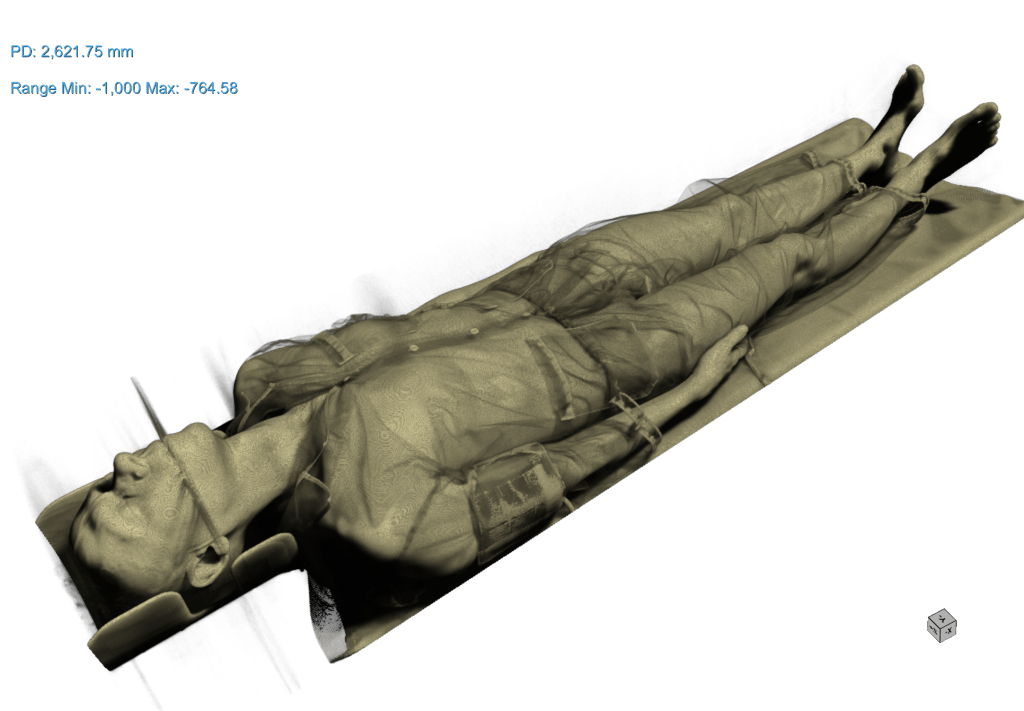
I was surprised that if you adjust the threshold setting to its widest extent you can see all the details of the subject – their hair, clothes and medical apparatus. This is usually missing from published images because it is deemed irrelevant to medical or scientific purposes.
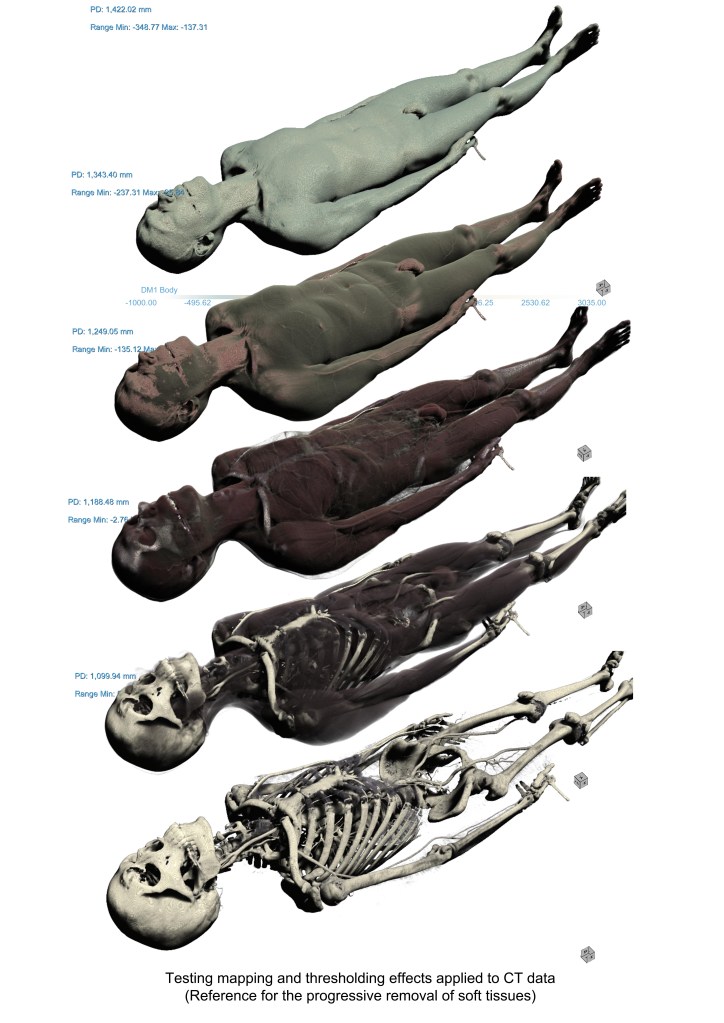
Eventually I discovered that the very basic animation features in Dragonfly allowed me to progressively strip away the softer tissues using mapping and thresholding effects. It is NOT an animation of the decomposition process itself which will be a liquefaction, but follows a similar sequence.
Bob and Mike from TheObjects were very supportive in my early attempts to evaluate their software. I imagine that their scientific curiosity in such a project could have motivated them, or an interest in a possible new application of their technology.
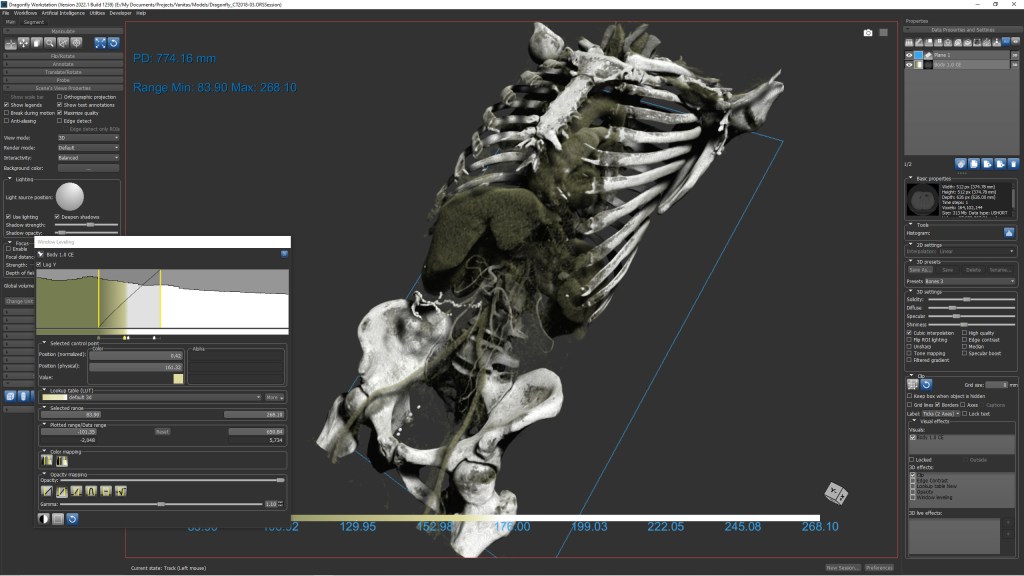
Here I will describe the practice of three dimensional ‘segmentation’ in imaging processing software and how it relates to the two dimensional compositing process of visual effects.
 The Posthumous World