Beginnings
People don’t usually think about what happens to the body after it has been disposed of, especially if it is after a conventional funeral. But there is another story there, the environmental story. And especially if you exercise the choice of something like a green burial.
I am With You Always
AUG 2019
I wake up one morning while on holiday in Ottawa, Canada with an idea to make an animation that accurately traces how my body will decompose back into the earth. This trip will be the last time I will see my father-in-law Voyna.
NOV 2019
I meet my first collaborator – Patrick Randolph-Quinney, a forensic anthropologist then based in Preston.
FEB 2020
I contact Ben Cook at the LUX Centre in London who becomes my first exhibition collaborator.
MAR 2020
The first COVID lockdown begins in the UK.
APR 2020
My 94 year old father has a fall and becomes unable to look after himself. I become the person in charge of his care for the next year and a half.
SEP 2021
My father dies on 13th September, the pandemic is officially over and I resume work on the project.
Scenario #1
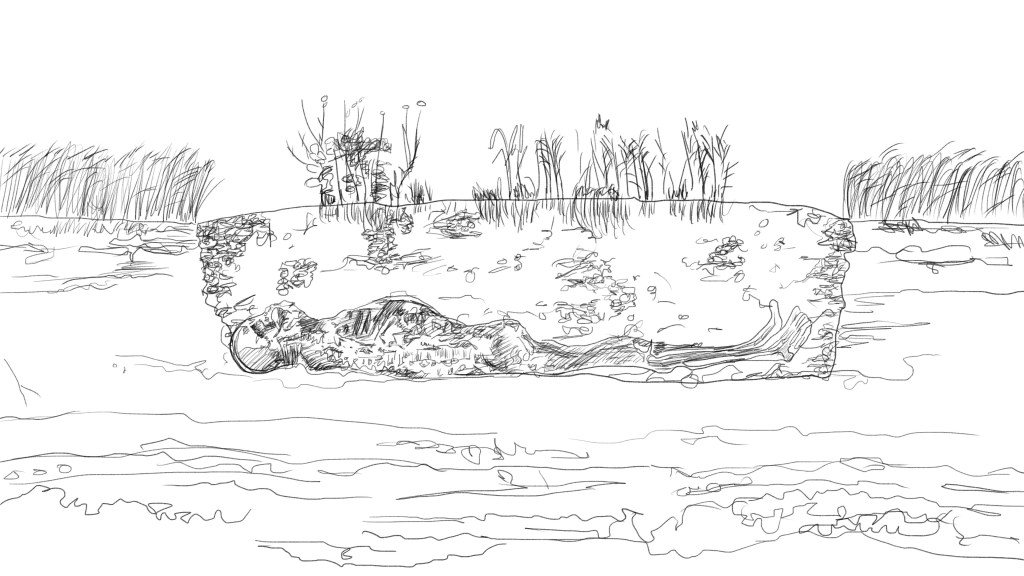
Visitors are walking on the grass above the decomposing body. It is a green burial, shallow grave so the decay is clearly visible. The ground is transparent or x-ray style so we see the body through the ground. Or we position the viewer at eye-level with the ground, below the surface.
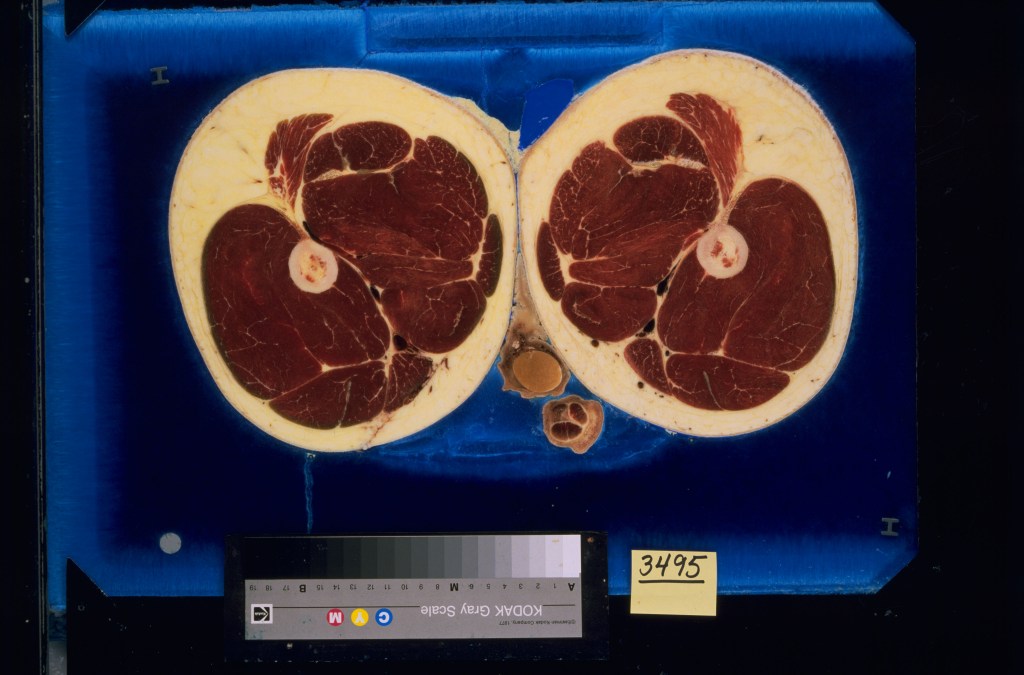
The Visible Human Project animates a digital version of a dead person’s body. My project animates a digital version of my live body as though it is dead. Although I can stop living and allow a digital copy to live for me, I cannot stop my encroaching death and allow a digital version to die for me. This process will always result in at least two dead bodies, both of them in infinite but separate processes of decay and transformation.
https://www.nlm.nih.gov/research/visible/visible_human.htmlhttps://www.nlm.nih.gov/research/visible/visible_human.html
Taphonomy – the study of decomposition
Forensic scientists commonly ‘score’ a body by its visual appearance into four broad categories – fresh, bloat, active decay, advanced decay. This means that a visualisation of the entire decomposition process can be used to identify each category.
This display was a popup exhibit at the British Museum in 2019. A mummified man was discovered in Upper Egypt in 1886, probably buried in 3500 BC. He was brought to the British Museum in 1900. In 2012 he was CT scanned and these scans were used to build a ‘virtual autopsy’ using a new interactive anatomical dissection table. The audience were invited to ‘look inside his body’, ‘visualise his internal organs’ and ‘uncover the surprising way he died’.
Designed at the Interactive Institute and Visualization Center in Sweden using a virtual dissection table made by Anatomage. It is used for teaching anatomy, renders in realtime and costs $100k.
https://www.anatomage.com/table/
I feel as though I am poking, slicing and stripping this man’s body like a piece of meat on a butchers table. This mode of interaction produces an entirely analytical objectification. I decide this is not the form of engagement I want for my own work.
 The Posthumous World