The Planter of People
SEPT 2024: Henley Woodland Burial Ground is a natural or green burial site set up by James Leedam. I had contacted James and he suggested that this site might have the right soil conditions for my project. He put me in touch with the site’s custodian Phil Pawley-Kean. I asked Phil if I could see a grave hole and he gave me a date when they were due to prepare one for a funeral that afternoon.
https://www.leedam.com/locations/henley-on-thames/
Phil gives me an introduction to the site which was set up as a burial ground 13 years ago. From woodland to meadow, it stretches across 40 acres, with trees gradually being planted by Phil over the graves until eventually they will fill the whole site – probably tens of thousands of graves. At one point Phil described himself as a ‘planter of people’ – the bodies being interred first and then the trees and the grass on top. This struck me as an evocative way to think about it. Although the bodies ‘planted’ here will not grow like the trees into people, one could think of them as being deliberately placed like pots from which new life will sprout.
Although this is one field, I was surprised to find that there is a wide range of soil types. The lower field was described to me as a clayish loam and the upper field more sandy and stoney. The grave I had come to see was in the upper field…
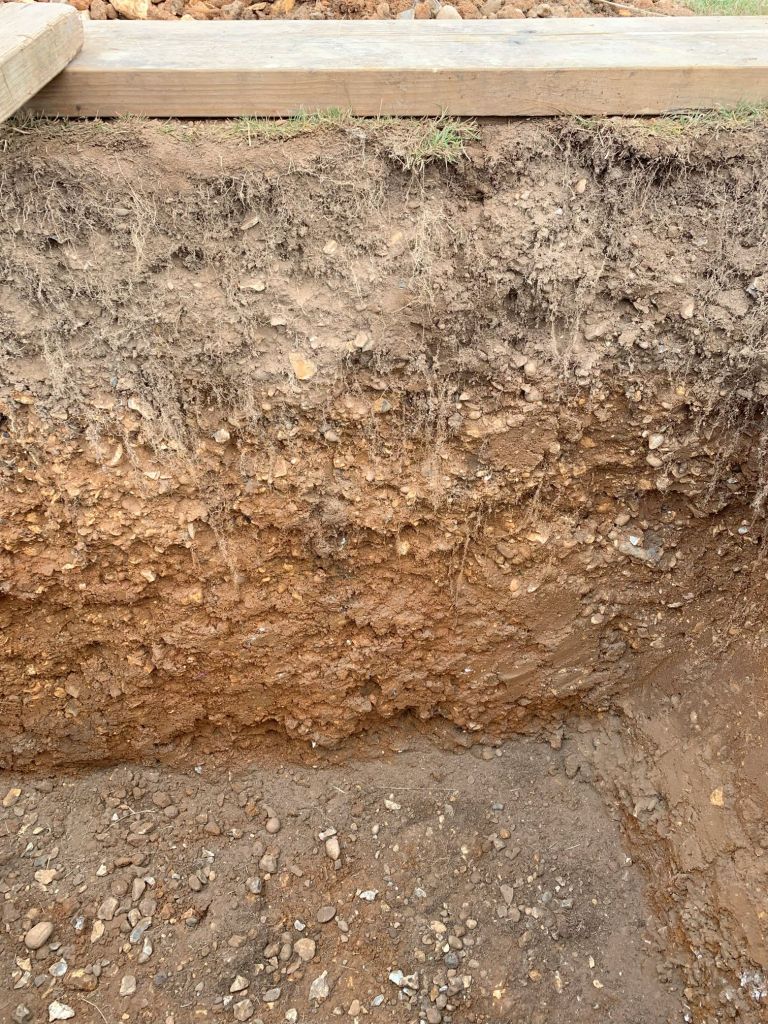
At this site the graves are dug 4 feet deep. I believe other sites can be shallower at 3 feet. The Environment Agency requires at least two feet of soil on top of the body but beyond that we are unsure as to whether someone can request a certain depth.
I realised that I had never looked properly into a hole in the ground before now and I was surprised to see how quickly the soil changes as you go deeper. The top soil is more like sandy loam but after less than a couple of feet there is a layer of almost pure sandy followed by very sandy soil.
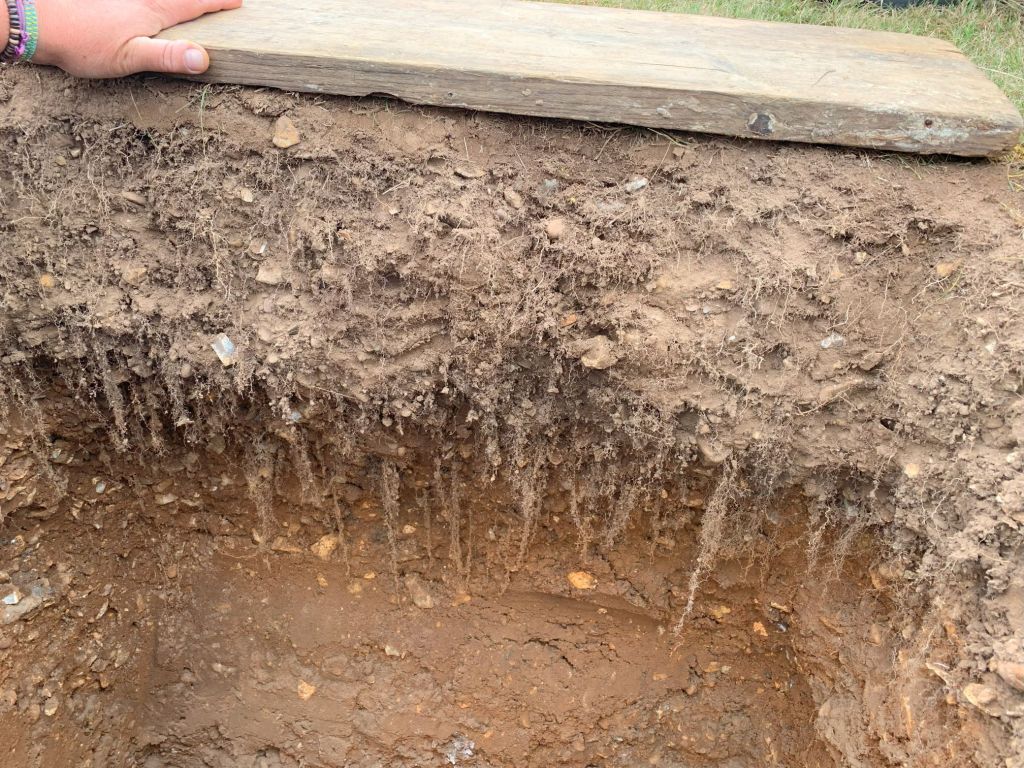
I was astonished at the depth of the grass roots. If you consult a gardening web site they will tell you that the length of grass roots are about 6 inches. Here they were going down as far as 3 feet. Mark Pawlett thought that this could be an indication that the grass is looking for more nutrients. It also means that it is more likely that grass roots could reach my corpse and start to feed off it. But once the grave is back filled, how long would the new grass take to grow to this depth? We don’t know!
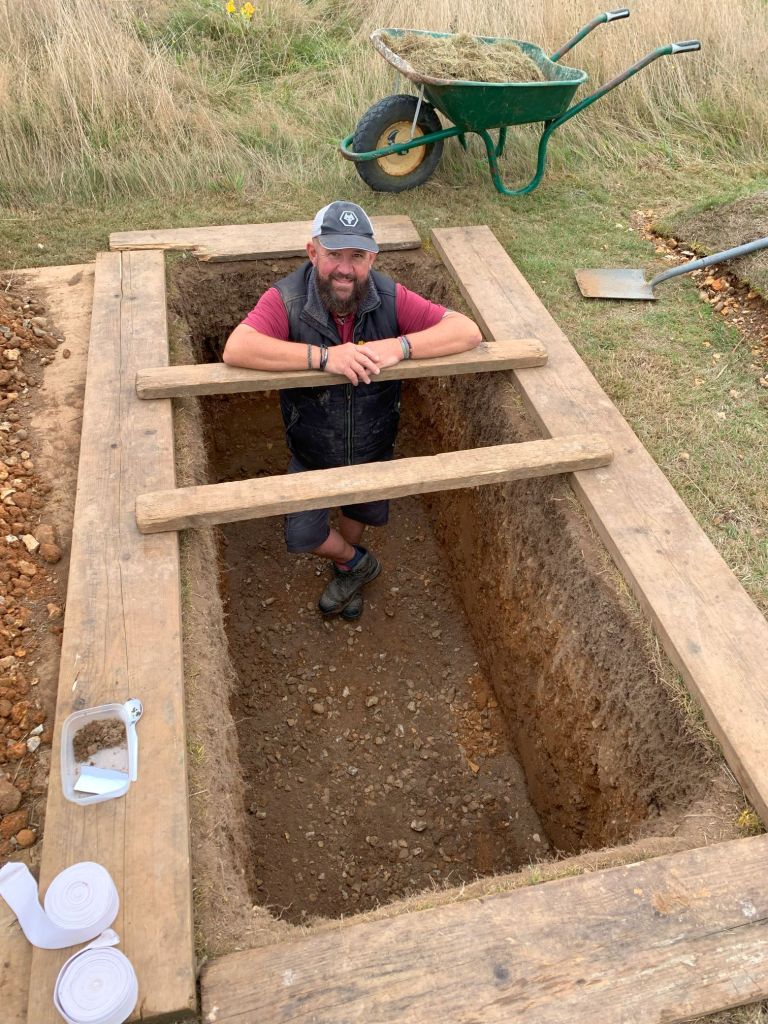
Jonny Yaxley is the grave digger. Here he is ‘dressing the grave’ which involves putting a layer of freshly cut grass on the bottom to create a ‘bed’ for the body. Depending on the time of year it could be flowers or leaves. This is for decorative purposes but the cuttings probably contain small creatures that will effect the decomposition in some way.
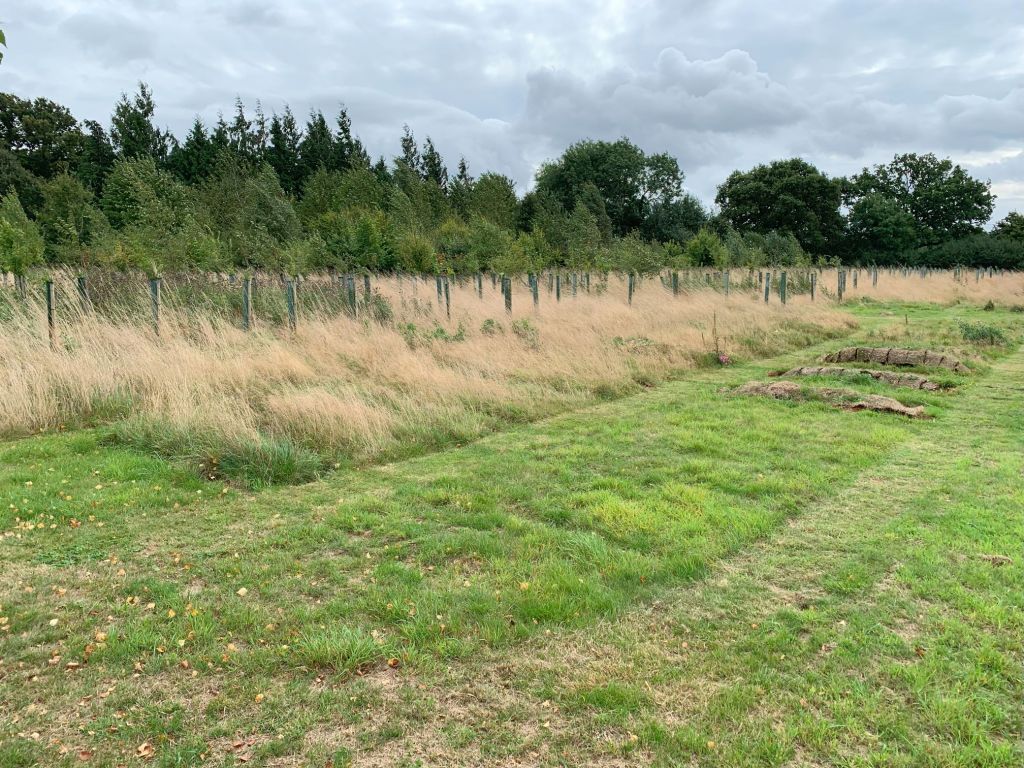
In this photograph I tried to show how the burial site is gradually developing. In the front you can see a row of new graves. Just behind them you can just make out another row of graves but more overgrown. Behind them it is no longer possible to make out individual graves. Young trees grow here and further back there are maturing trees and other plant life. It surges forward like a wave, absorbing the graves into a new landscape.
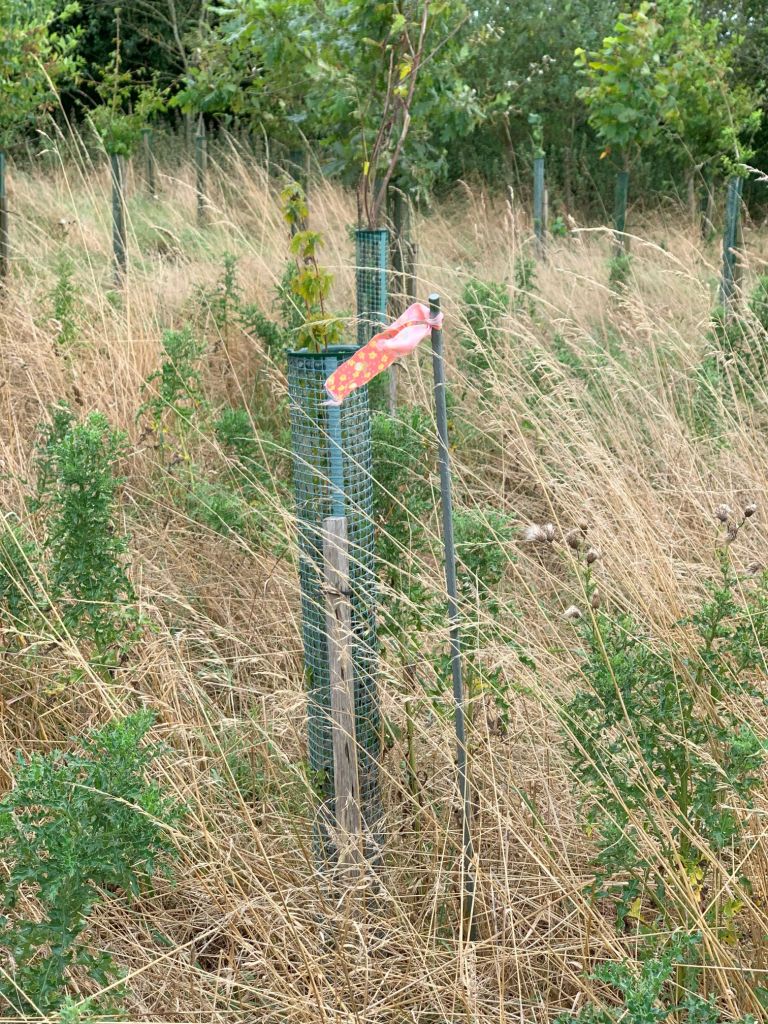
Permanent markers are not allowed on green burial sites so each grave position is recorded using GPS and WhatThreeWords. Graves become overgrown so quickly that sometimes Phil places a temporary marker if a visitor tells him in advance that they wish to see a certain grave.
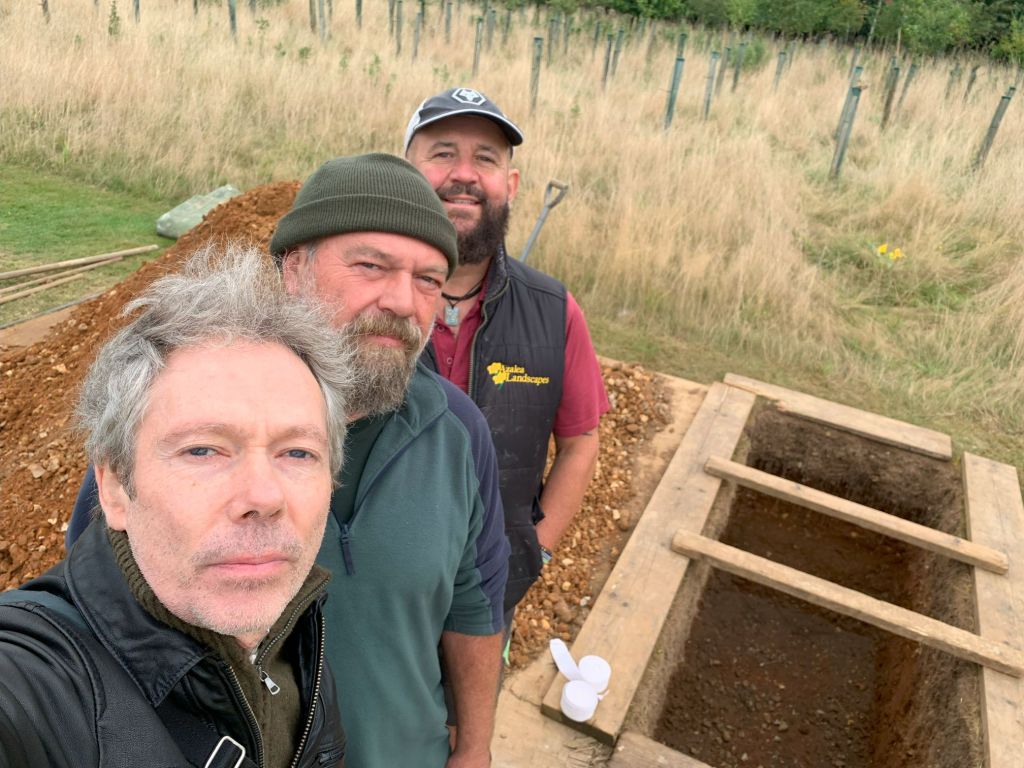
A big thanks to Phil and Jonny for making this such an enjoyable and rewarding day.
 The Posthumous World