The Shrine Project 01
NOV 2022: I discover an essay by the Ghanian philosopher Kwasi Wiredu. He explains the African practice of ancestor veneration – in what sense is the African world of the dead an other world? The answer must be that it is in no sense another world, but rather a part of this world… the cultural unity of the living with the dead in the thought of many African peoples.
What survives physical death is the soul, which, for Plato, is an absolutely immaterial entity. During the life of a mortal, this entity is ‘imprisoned’ in the body, so that death is actually something in the nature of a liberation… However beautiful this conception may be, it offers no possibility of a social interaction between the dead and the living and is as far removed from African conceptions as anything can be
Kwasi Wiredu, ‘Death and the Afterlife in African Culture’. In Person and Community, Ghanaian Philosophical Studies, I. Edited by Kwasi Wiredu and Kwame Gyekye, 2010.
In Wiredu’s account, the ancestors continue to watch over the affairs of the living in a way similar way to the way they did when alive – it is ‘immortality for the service of hunankind’. The deceased become ancestors because they have a familial and social reason to, ancestorhood being open to anyone who is recognised as having had a supportive role when alive. Survival of death as an individual person is not required.
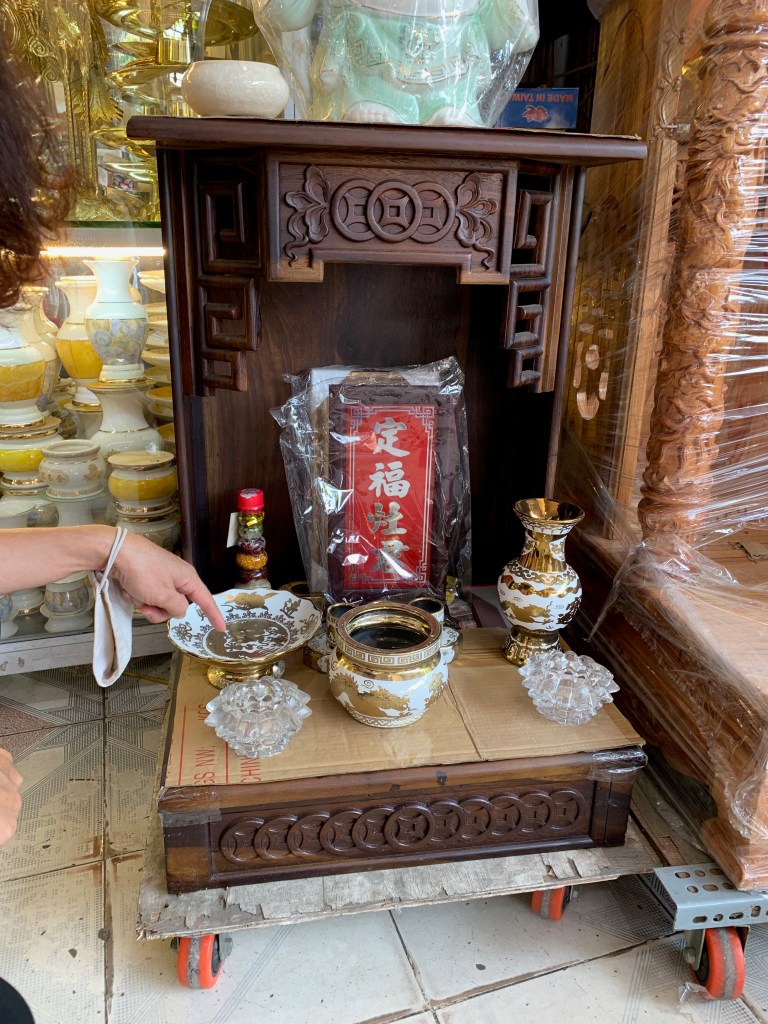
The practicalities of how the living receive help from the ancestors is beyond the scope of Wiredu’s essay. I come across an essay by Stephen Grasso called ‘Feeding the Bone Orchard’. Grasso describes himself as a ‘Newcastle-born witch doctor’ who ‘borrows freely from African Diasporic culture’. For Grasso, ancestor veneration is an internal process of self-knowledge practiced by a living individual… first build a shrine. Light candles, offer them fresh water and whatever they enjoyed in life. Set an extra place for them at dinner.
The ancestors are said to communicate through dreams, visions and meditation. To me this means simply thinking about them when in the presence of the shrine…
Ancestor work is understanding where you have come from in order to understand where you are going. It is about accepting uncomfortable aspects of your ancestral part and taking responsibility for them. It is about recognising and celebrating the strengths and resources of the generations before you.
Stephen Grasso, ‘Feeding the Bone Orchard’. In Writing on Death: New Perspectives on Dying, Ed by Ru Callender, Natural Death Centre and Strange Attractor, 2012.
I decide that this could be a way to expand the project into practices and rituals of death – specifically to start to answer the question of how to connect the ecological continuity of the corpse with the cultural and social continuity of the person?
JAN 2023: I begin to build my own ancestor shrine on a shelf in the corner of my study. This one will be different because it includes me…
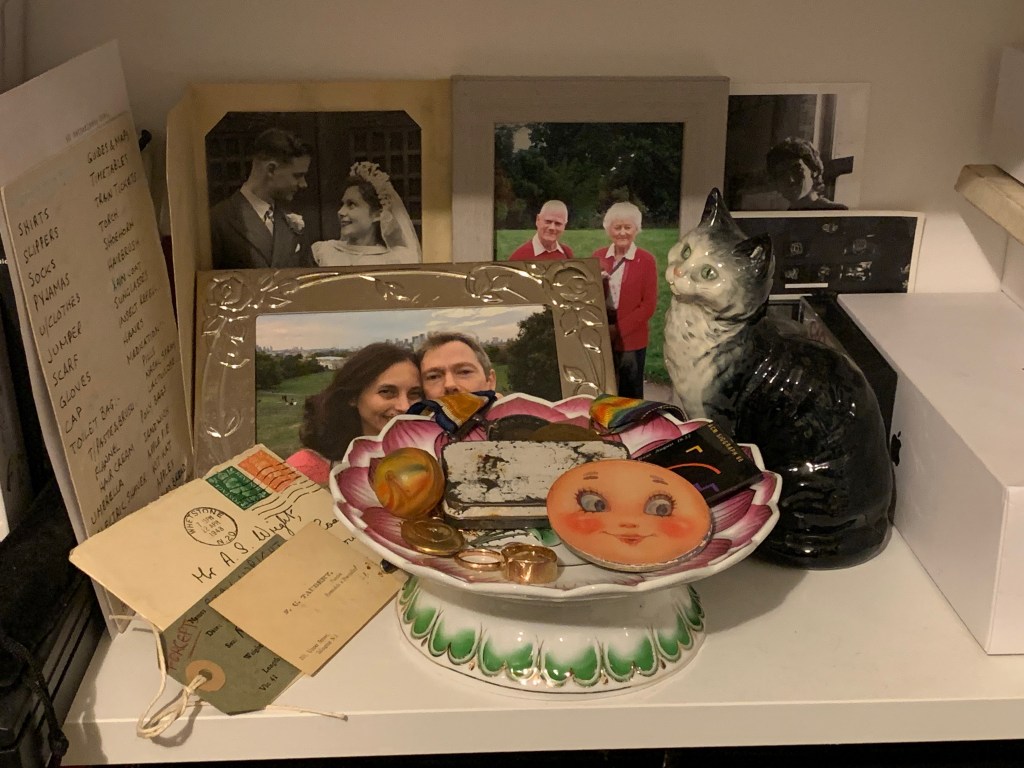
list items on the offering bowl…
- My maternal grandfathers WWI medals
- Sparklers that my father used to make Christmas sculptures
- My mother and fathers weddings rings
- A heart locket with a picture of my father inside
- A matchbox with a cockroach inside that I caught when staying for my first time in NYC
- A rubber ‘superball’ from my childhood
- An animated face that may be from my childhood or possibly my mothers
list items in the background…
- Photo: my parents wedding photo
- Photo: my father and his sister, shortly before her death
- Photo: my mother and grandmother at the seaside
- Photo: myself posing in front of a computer on my degree course
- Photo: my friend and I making our first animated film
- Photo: my girlfriend and I, who is now my wife
- A love letter from my mother to my father shortly before they married
- A calling card from my maternal grandfather, a furrier at the time.
- A calling card from my father-in-law, who was an optical engineer
- My baby name tag
- A china cat that was always on our mantelpiece
- An audio cassette tape of my mother reciting some stories she had written for her creative writing classes
- The pump I had fitted for my chemotherapy
- A toy London bus
- My father’s list of places he liked to visit after retirement
I keep my shrine behind a cardboard box so it is protected from sunlight. I am not sure if I have the negatives to the oldest photos so they may be irreplaceable. The cardboard box is easy to remove so I can see the shrine without having to make an effort.
You can read the next part of the Shrine Project here…
 The Posthumous World