Where Is My Mother?
2nd January 2025: The day after new year’s day, we decided to visit my mother’s grave in City of London Cemetery and Crematorium in Manor Park. This would be the first time I had visited her grave since she died in November 1998 – 27 years ago. As she had been buried you might have thought that fnding her grave would be an easier task than
detecting traces of my fathers scattered ashes. It turned out to be even harder.
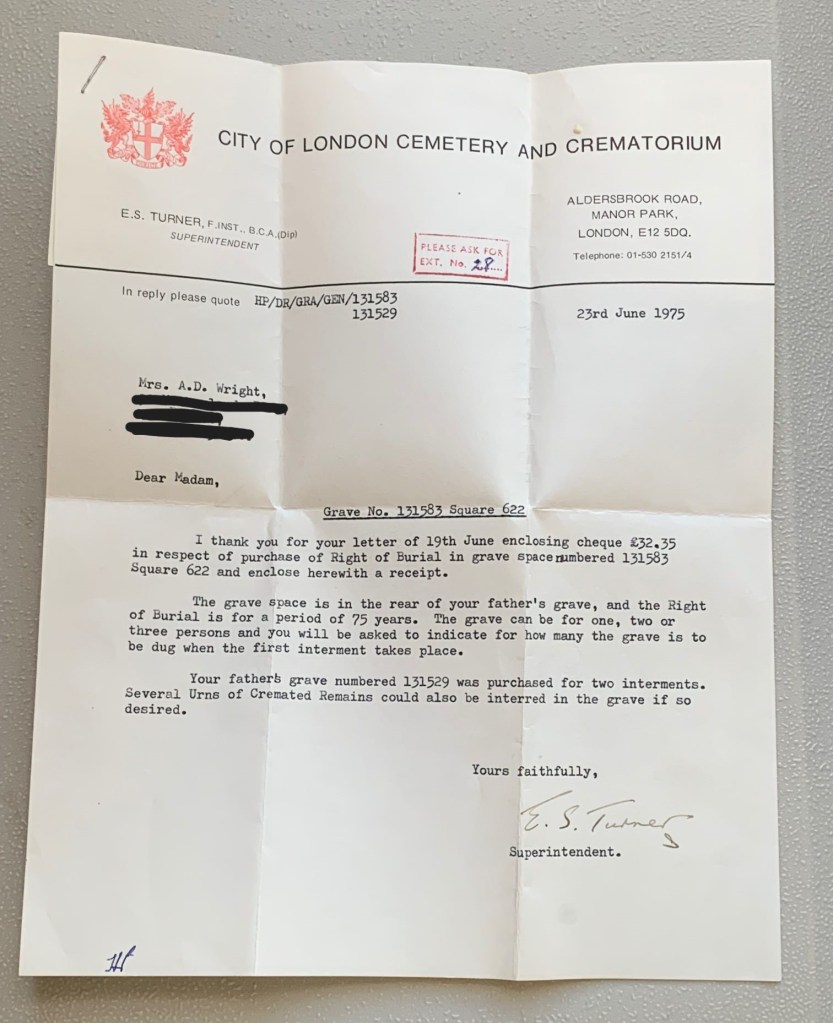
I have the receipt for the grave plot when mother bought it in 1975 (after grandfather had died and been buried there). Exclusive right to this ‘parcel of ground’ for 75 years, 6’6″ by 2’6″. £32.35.
Square 622, number 131583.
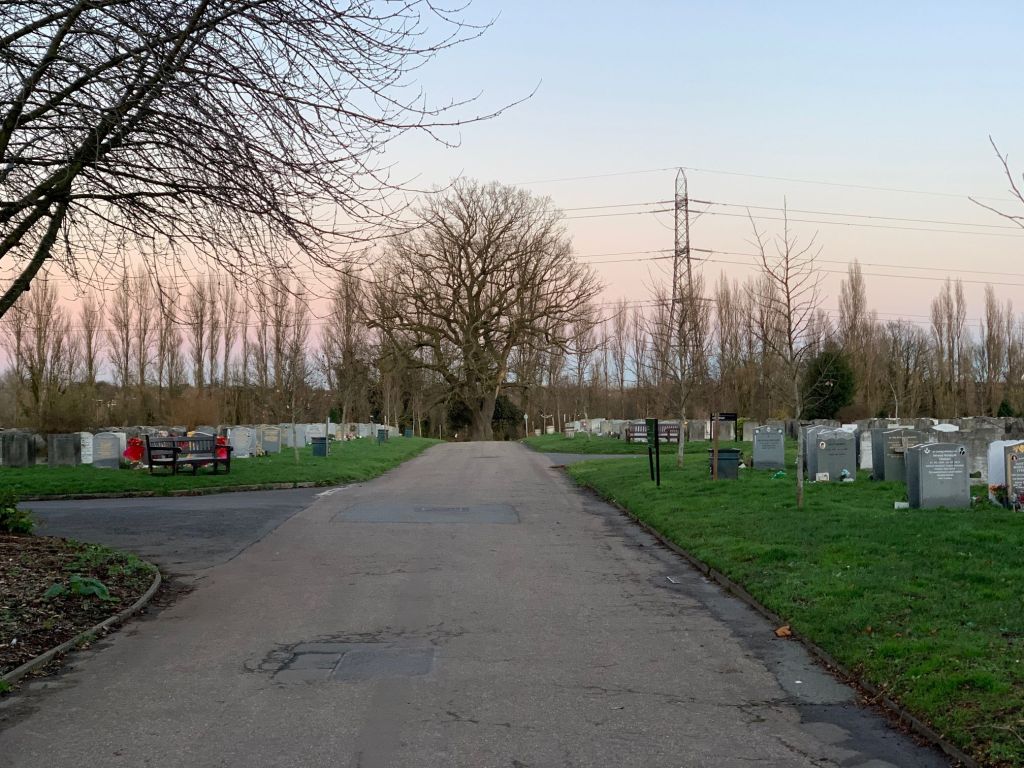
I had a map that my father had drawn by hand and kept with her will. Just like in the movies, Father’s map instructed us to look for the ‘large oak tree’. Then we were to walk down a ‘grass path’ and we would find it in the first row, fourth block to the right. She had been buried in the same grave as her parents, 7 years and 23 years earlier, all 3 together.
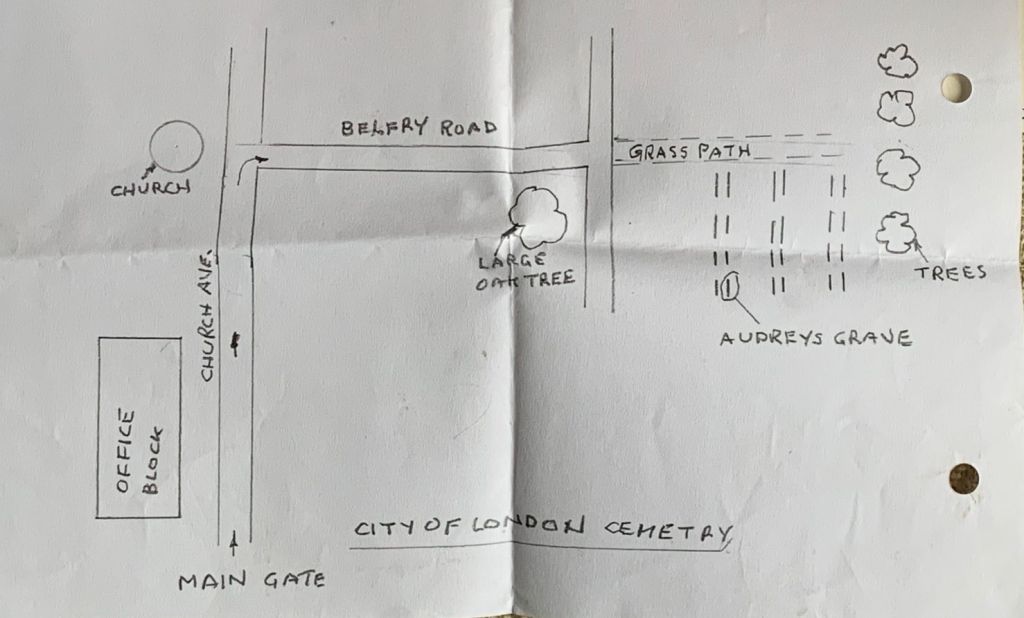
We walked for half an hour without luck. We looked at every grave in the first row and there was no sign of mother’s. The grave numbers did not appear to follow sequentially and the square section numbers changed unexpectedly. The graves should have the numbers engraved on their backs but many have faded.
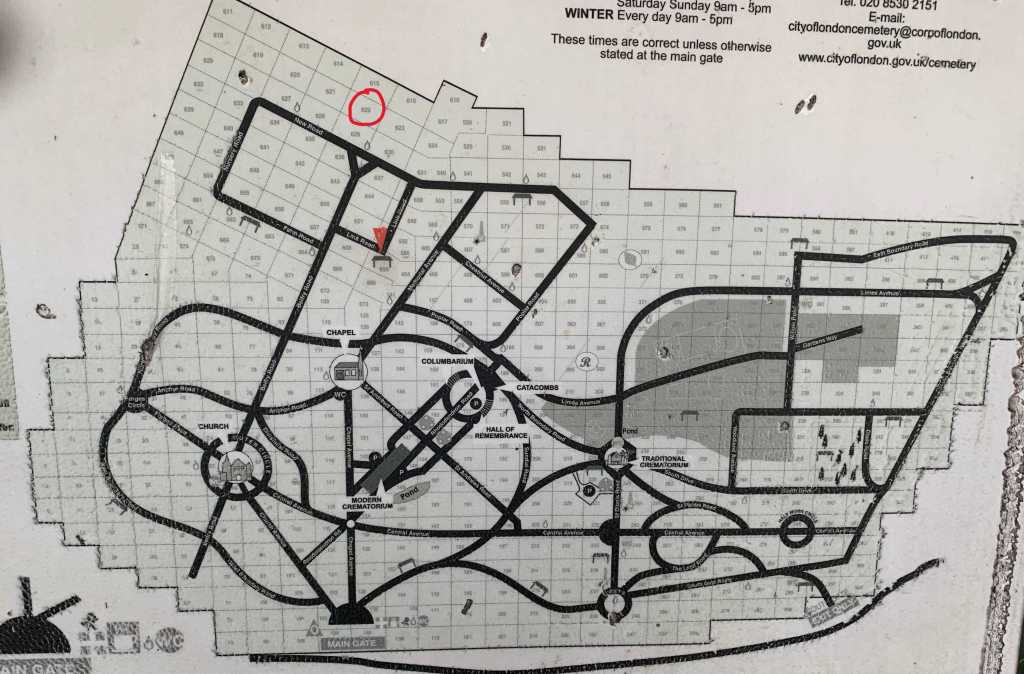
I decided to go back to the office to get a map but then found one on the way. When I saw section 622 I realised we had been looking on the wrong side of the tree. There was also no longer any sign of a ‘grass path’, grass not being in the habit of sitting around for over 20 years so people can still find it.
When I got back LJ had found mother’s grave anyway. Father’s map had indicated that mothers grave was in the first row after the oak tree but it was several rows back. LJ had realised that at that time this row was at the front but since then more rows must have been dug in front of it. Instead she counted it as the third row from the back of the field. Fathers map had aged and had to be more carefully interpreted.
The discovery of my mother’s grave created a further mystery. I believed that my mother had been buried together with her parents but obviously I was wrong. Where then were my grandparents?
There was a spare place next to her grave and a depression in the ground. We wondered if that had been the remains of grandparents grave after some accident. We walked around the other side and discovered that their grave was behind hers. I had even forgotten that mothers grave was separate to my grandparents. I should have read the grave receipt more carefully where it says ‘in the rear of your father’s grave’.
Why had I never visited my mother’s grave before now?
The physical place had not meant anything to me. Who cares where the remains are? Since I started this project I had come to realise that this place did have significance, even though this form of traditional burial was extremely conventionalised, it was still the result of some kind of decision. Mother’s family had come from Homerton and the East End and saw her body as belonging here.
Why did she choose burial?
I remember my mother did not like the idea of being cremated. She had heard a vicar once saying ‘we condemn you to the flames’ at someone’s funeral and it upset her.
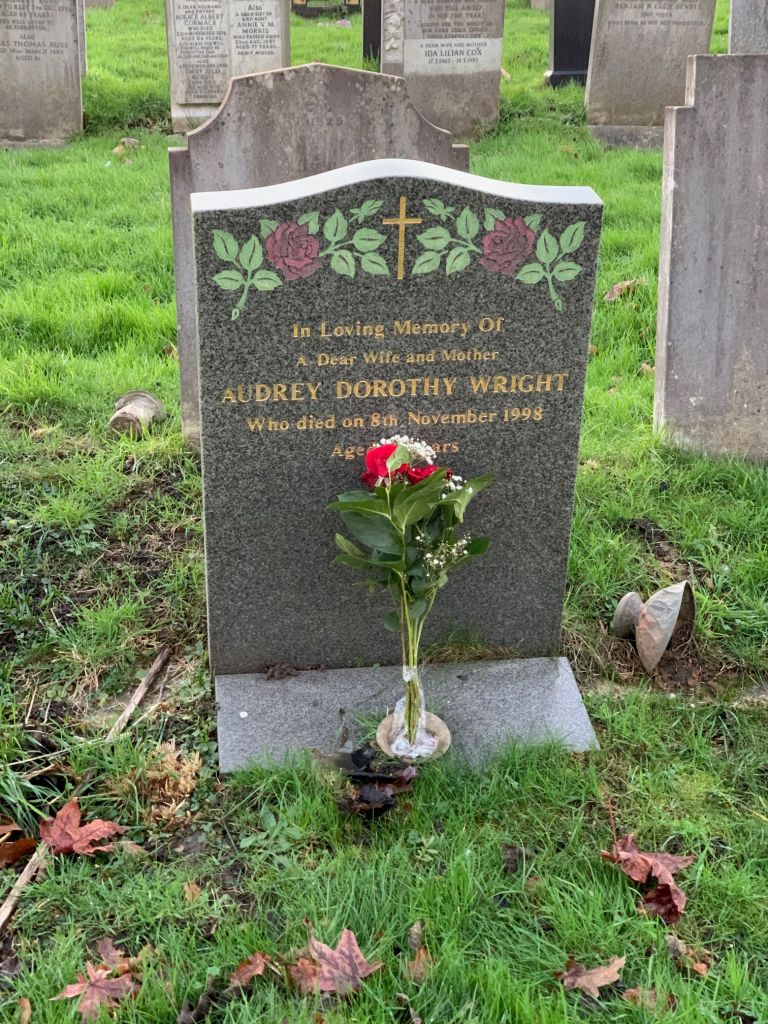
I had been looking for an older gravestone but this one looked fresh. LJ thought that mothers grave looked like father had made a lot of effort and was not cheap. It looked quite modern compared to others that were only 20 years older. It had red roses engraved at the top which coincidentally matched the flowers I had brought. Although I had never visited the grave until now she wondered if father had been visiting it without telling me.
Grandfather’s inscription, who had died of Parkinson’s disease in 1975 –
‘We heard you suffer, heard you sigh,
you never deserved what you went through,
we will always love and remember you’.
Mother and grandmother had heard of this eulogy and decided to use it for grandfather. However, once it had been finished they were a bit disappointed because they realised they had forgotten the second line, which explains why there is nothing to rhyme with ‘sigh’. What a difference with grandmother’s and mother’s inscriptions 16 and 23 years later which include no such sentiments.
This had been the first time I had visited any family grave as the eldest generation. I had thought it would be all about the grave itself but instead it turned out to be about the journey – an excavation through time and space. After only 27 years, memories have faded and documents become displaced. We saw how the past has physically and literally become like another country.
 The Posthumous World