Richard Wright
Richard Wright is a visual artist known for his pioneering digital animations and interactive installations. International venues he has exhibited at include Arnolfini Gallery Bristol, Manifesta 7, Museum of Contemporary Art Istanbul, ZKM Karlsruhe, San Jose Museum of Art, Furtherfield Gallery London, Science Museum London, The British Library London, LUX Gallery London, European Media Art Festival, Rotterdam Film Festival, Hiroshima Animation Festival. He is Lecturer in Animation and VFX at Royal Holloway University of London, holds a PhD in the aesthetics of digital film making and has published nearly forty essays.
2016
Elastic System
installation and web site
The ELASTIC SYSTEM is the first artwork to be given access to the British Library’s core electronic networks and databases, produced during a year-long artist-in-residency. The work takes the form of an interactive portrait of the C19th librarian Thomas Watts. In the 1840s Watts invented his “elastic system” of storage in order to deal with the enormous growth of the British Library.
The artist created a mosaic image of Watts by photographing 4,300 books that are stored in the Library basements, an area not normally accessible to the public. Each book is connected live to the Library’s electronic requesting system (active from 2016 to 2020). By clicking on a book you can find out more about the item and how to request it from the Library. When you do request a book, it was removed from the mosaic to reveal a second image underneath, an image that represents the staff in the Library’s underground storage basements, the hidden part of the modern requesting system.
After being exhibited as an installation at the British Library, the Hartley Library and the Digital Catapult centre in London, the ‘Elastic System’ was released as a public web site.
This work was part of an AHRC funded research project called ‘The Internet of Cultural Things’, a collaboration between the artist Richard Wright, Dr Mark Cote (KCL) and Professor Jussi Parikka (WSA) with wide representation from the British Library including Jamie Andrews, Head of Culture and Learning, Dr Aquiles Alencar Brayner and Dr David Waldock. The aim was to use digital data and the creative arts to transform the way people and public institutions interact.
The project blog is here:


2008
Tantalum Memorial
(Harwood, Wright. Yokokoji)
electro-mechanical installation and modern telephony system
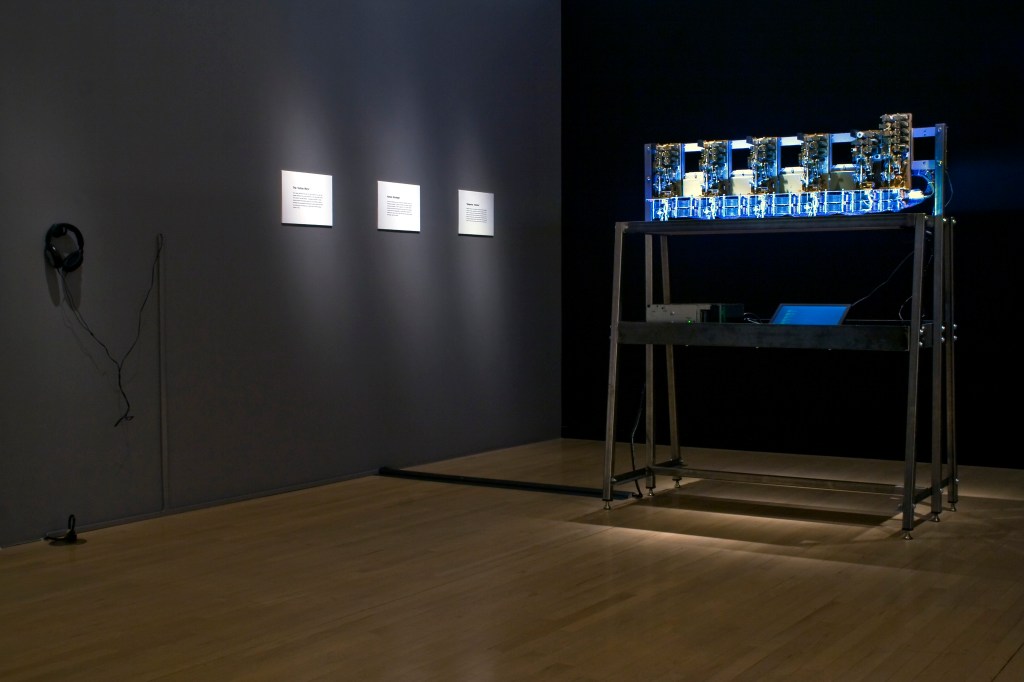
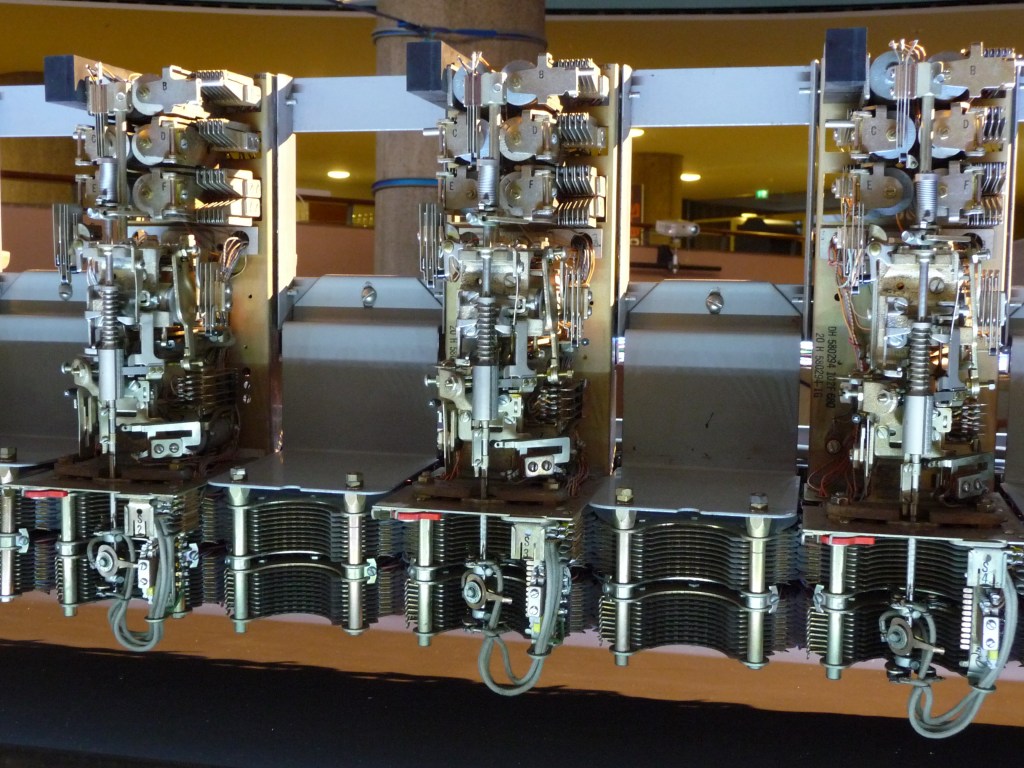
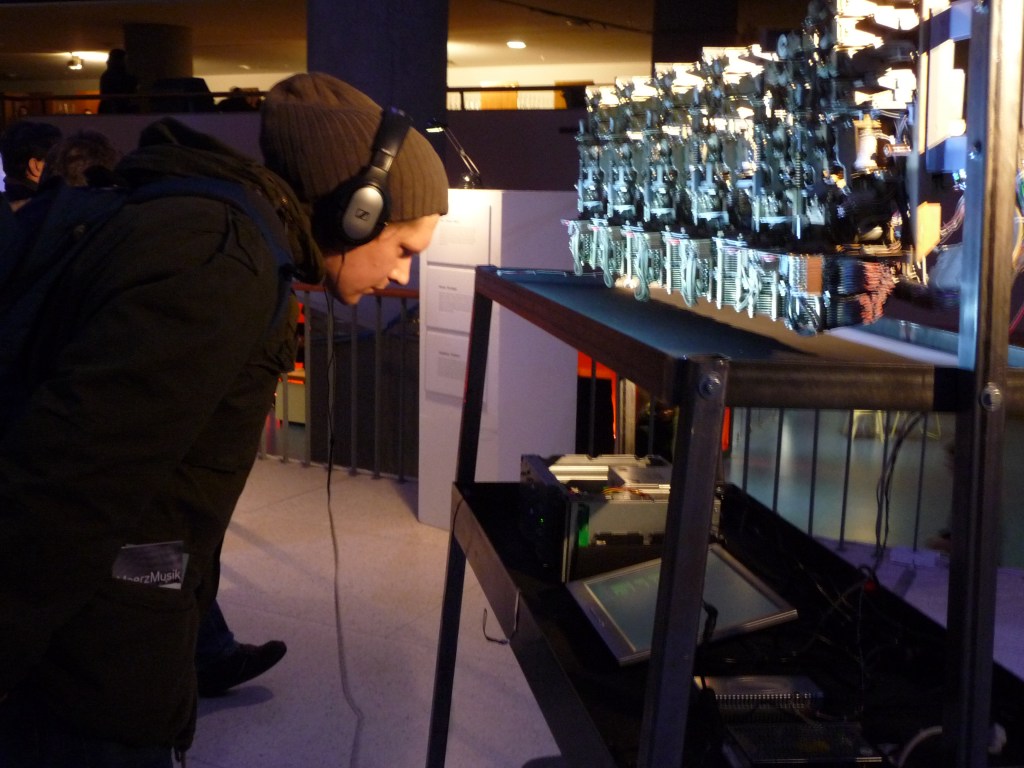
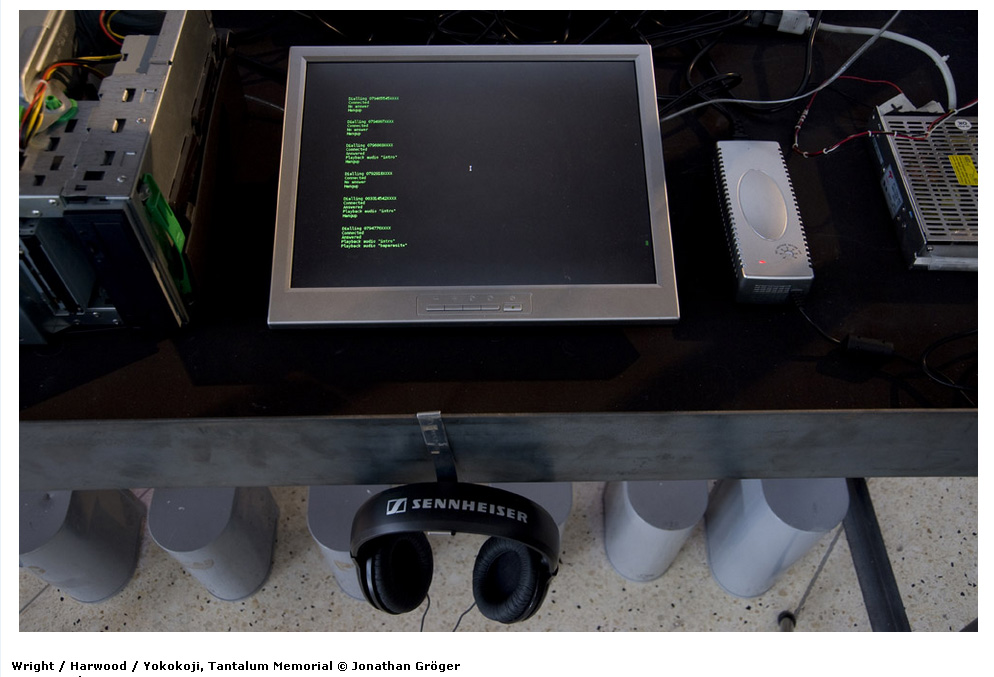
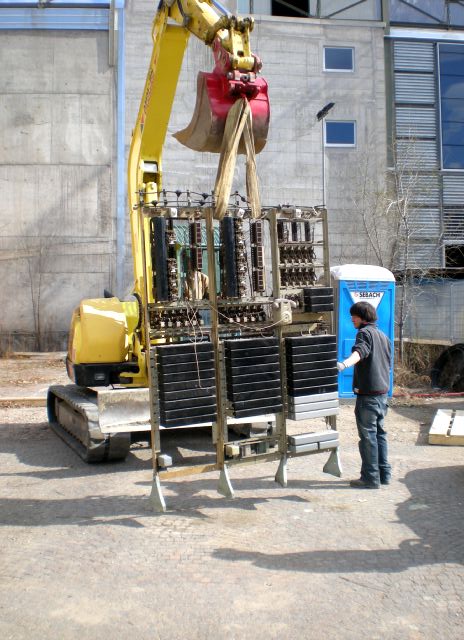
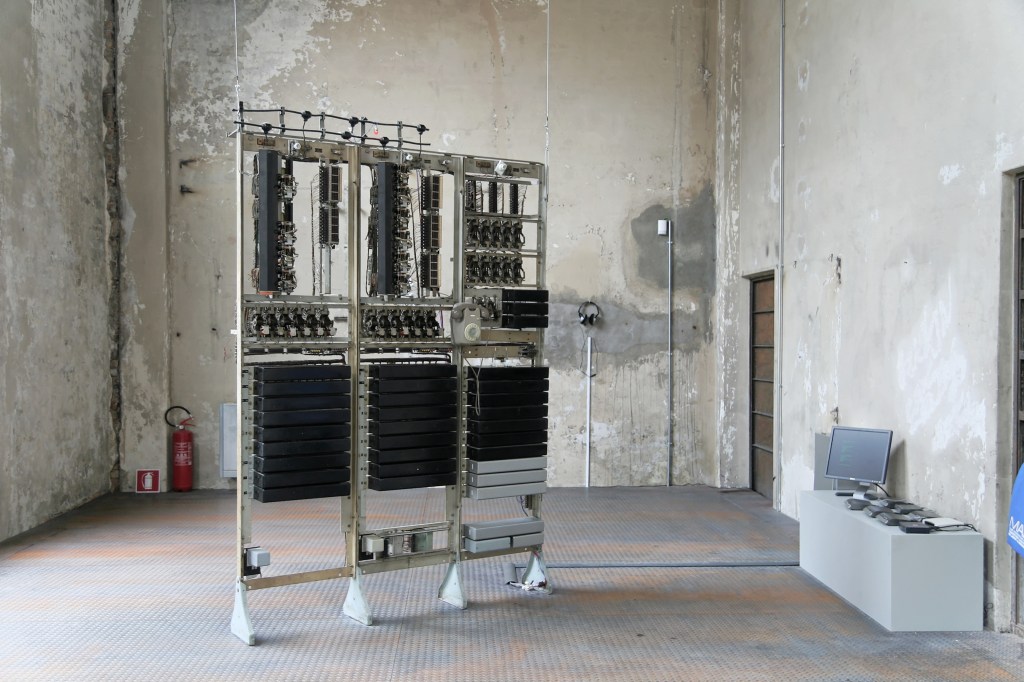
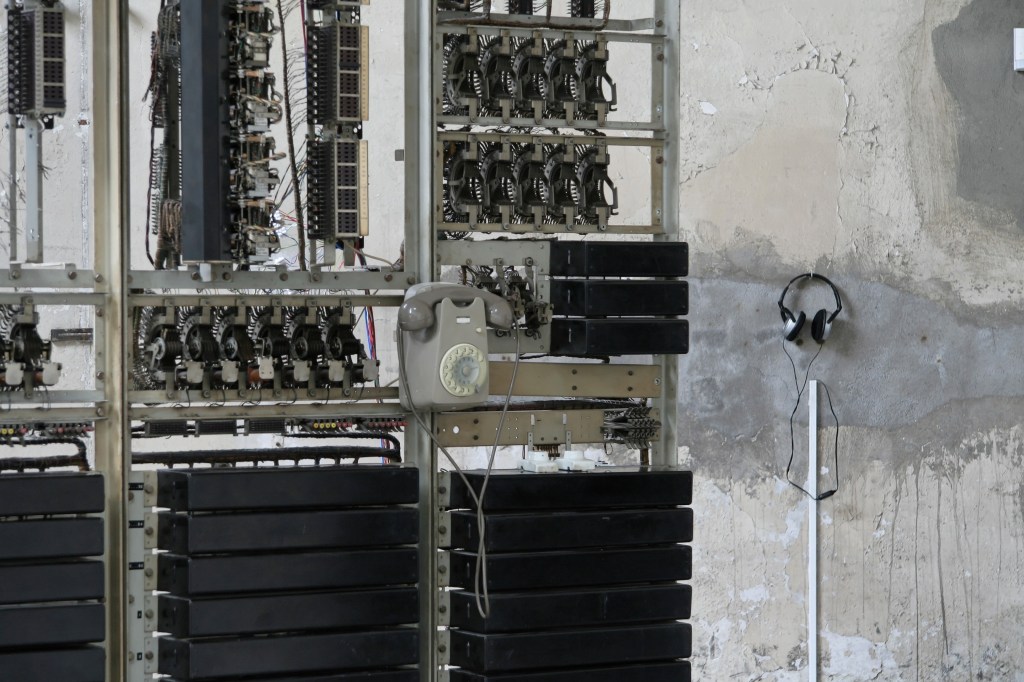
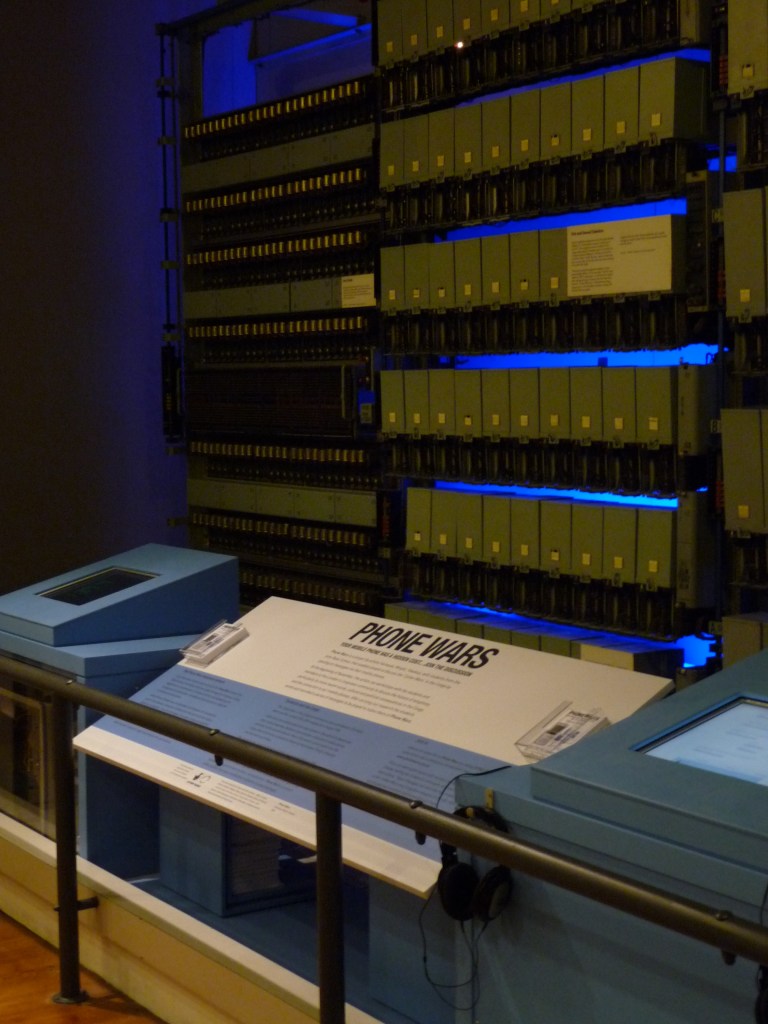
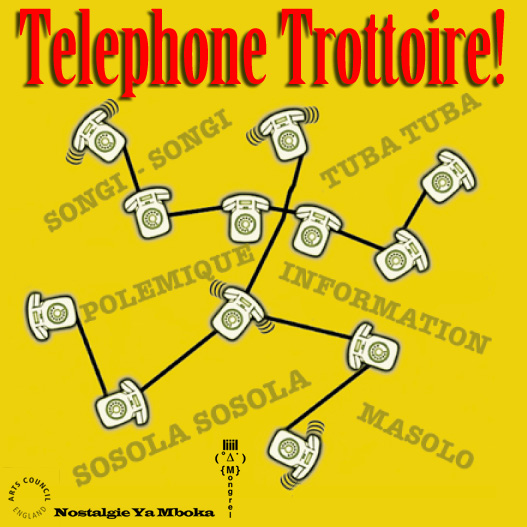
‘Tantalum Memorial’ is a series of telephony-based memorials to the people who have died as a result of the ‘coltan wars’ in the Congo. The installation is constructed out of electromagnetic Strowger switches – the basis of the first automatic telephone exchange invented in 1888. The movements and sounds of the switches are triggered by the phone calls of London’s Congolese community as they participate in ‘Telephone Trottoire’ – a concurrent project also built by the artists in collaboration with the Congolese radio program ‘Nostalgie Ya Mboka’.
From1998 to 2008 there were 3.9 million deaths in the ‘coltan wars’ and there are currently over 35,000 Congolese refugees in the UK alone. Coltan ore is mined for the metal tantalum – an essential component of mobile phones. ‘Telephone Trottoire’ was a ‘social telephony’ network that built on the traditional Congolese practice of ‘radio trottoire’ or ‘pavement radio’, the passing around of news and gossip on street corners in order to avoid state censorship.
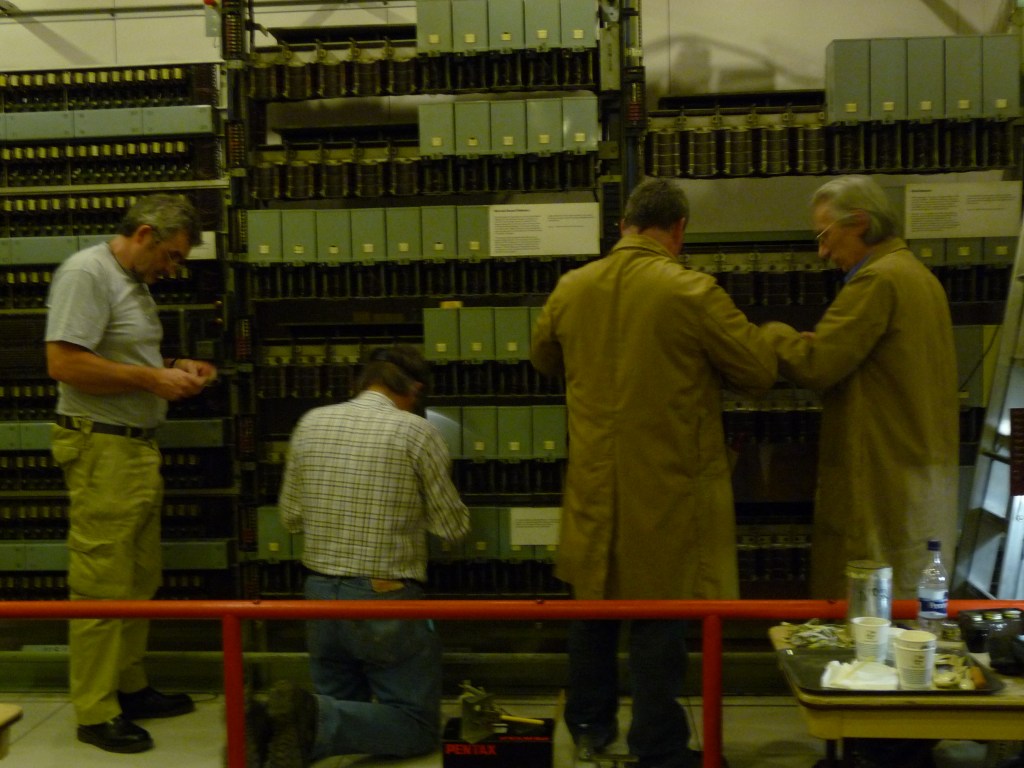
‘Tantalum Memorial – Reconstruction’ was the first in this series, commissioned for the ZER01 Biennial ‘Superlight’ show at the San Jose Museum of Art, 2008. ‘Tantalum Memorial – Residue’ (courtesy Manifesta7) was the second in the series, this time utilizing a 1938 telephone exchange rescued from the old Alumix factory in Bolzano, Italy. This was also the site of Manifesta 7 – the European Biennial of Contemporary Art, 2008. ‘Tantalum Memorial’ was next shown at The Science Museum in London UK by renovating their own Strowger rack with the help of the Telecommunications Heritage Group. This version was triggered by a new telephony project created with young people from the John Roan school and Congolese asylum seekers.
‘Tantalum Memorial’ toured for over four years to 15 cities including the LABoral Centre in Spain, OK Centre for Contemporary Art in Linz, the Arnolfini in Bristol and winning the Transmediale award in Berlin in 2009.
1995 Heliocentrum
(with Jason White)
digital video
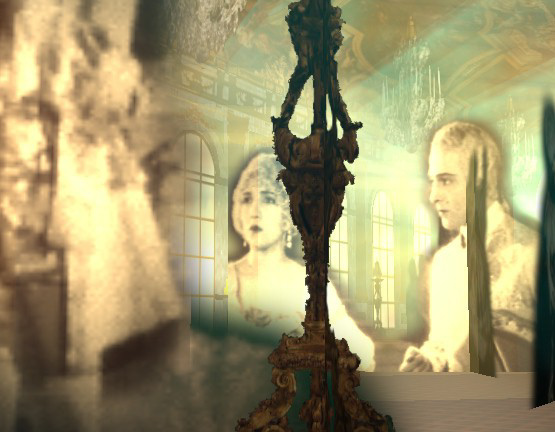
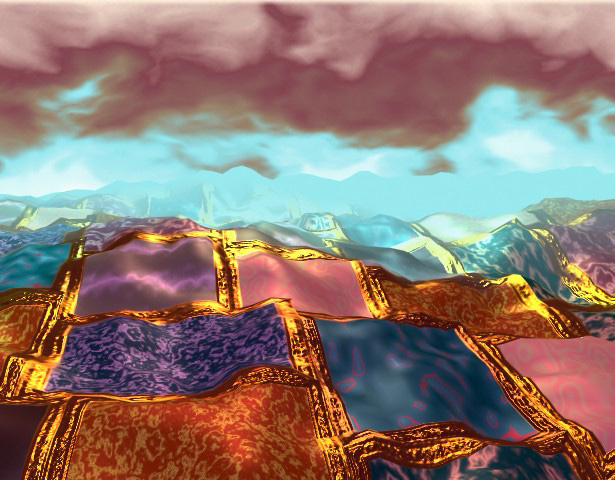
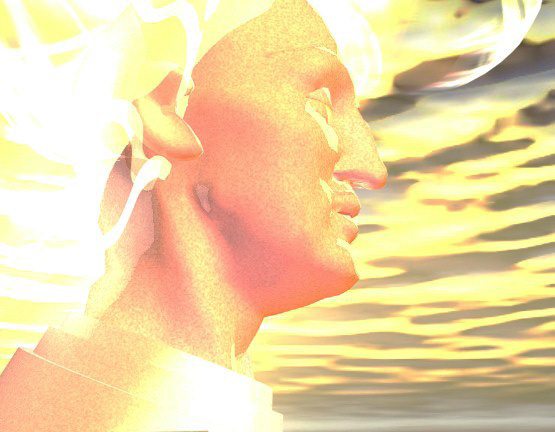
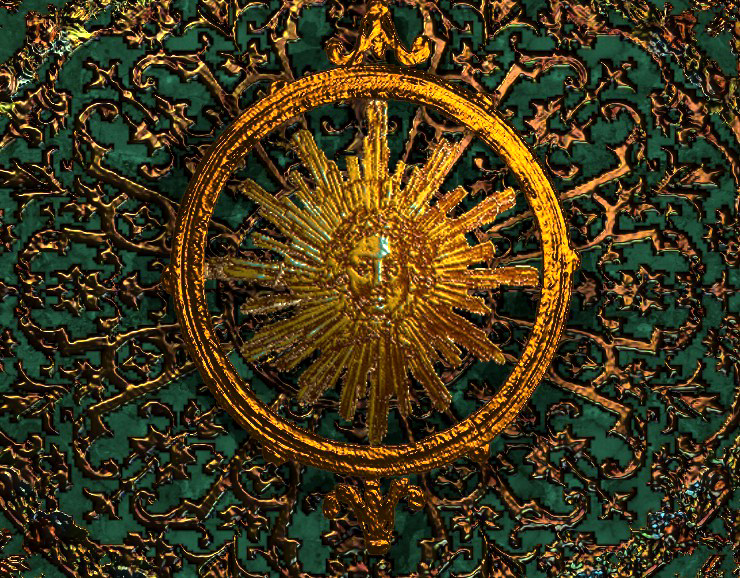
Political essay meets baroque rave video in this computer animated portrayal of Louis XIV and his pleasure palace at Versailles. Courtiers from a Rudolf Valentino movie appear in an environment more reminiscent of Blade Runner, while shots from the Poll Tax Riots are weaved into a virtual diorama of London. Uncover the Seventeenth Century origins of our fascination with special effects, surveillance and addiction to media spectacle.
A breathtaking computer animation exploring the aesthetics and ideology of the monarchist State. Broad sweeps of baroque and neo-classical imagery are laid bare to reveal the mechanisms of the spectacular society in thrall to these symbols of power. The authors draw a direct parallel between the lavish excess and calculating cruelty of the reign of Louis XIV, and the current regime in the United Kingdom. A subtle, deeply considered and visually impressive work.
– LUX Distribution
 The Posthumous World