Eco Taphonomy
Taphonomy is the science of the study of decomposition. Until recently it has been driven by forensics – how the environment effects the decomposition of the victim and can be analysed to determine time and cause of death. Now scientists have become more interested in how processes of decomposition effect the environment.
I will need to construct an accurate scientific model of the burial environment in order to determine how my body will decompose and what impact this will have on its immediate surroundings.
How will I go about this? What work has already been done? What is the nature of any existing models? Can I really see what it looks like?
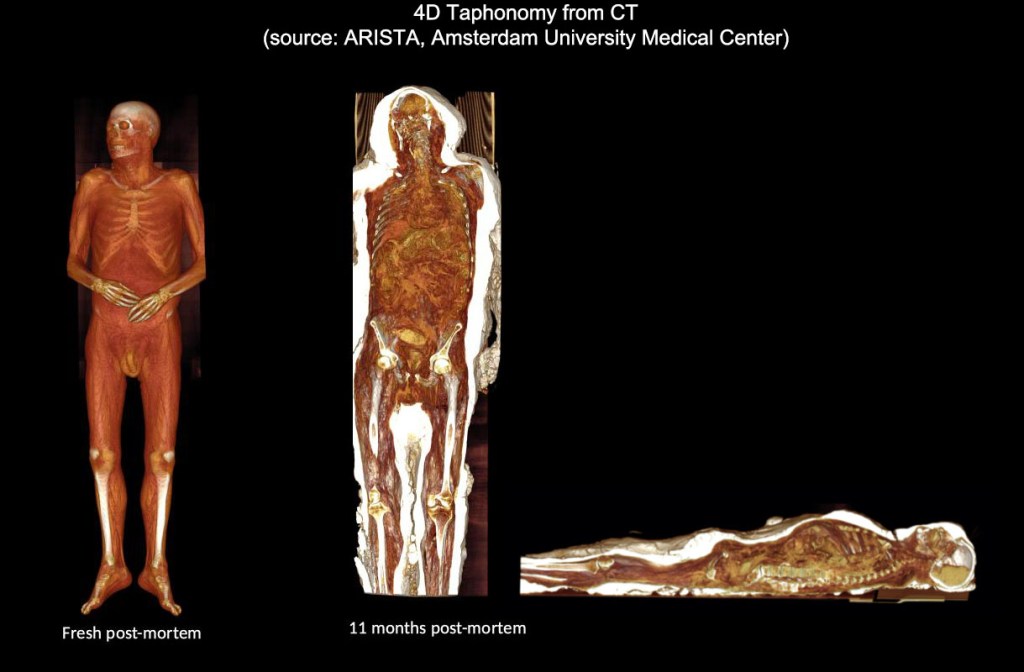
There have been taphonomic research facilities called ‘body farms’ since the 1980s. This image is from ARISTA, a relatively new one in Amsterdam where they have been disinterring dead bodies after 11 and 18 months and CT scanning them. This is the first time that there has been an attempt to empirically record the direct process of human decomposition.
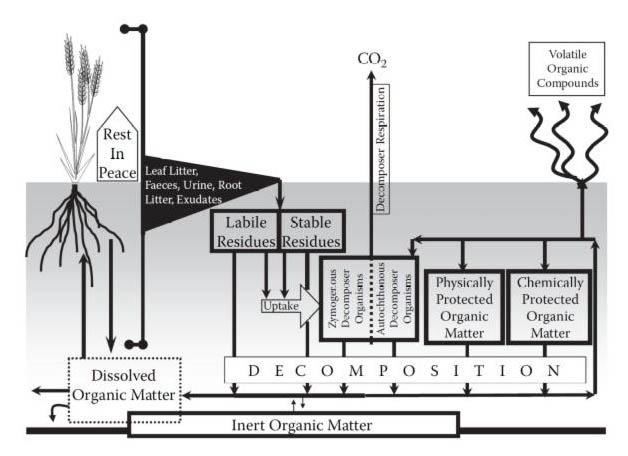
Shari Forbes is a forensic scientist and has set up so-called ‘body farms’ in Australia and Canada. She explains to me that a body that is shallow buried in sandy soil would typically take a minimum of 3 years to skeletonise. The area into which the body spreads as it decomposes is referred to as the “cadaveric island”
- the surrounding soil turns black – an oval shaped blob called the ‘black silhouette’.
- the liquefying soaks down under gravity, but only a few centimeters. It may only spread to the sides of the grave if the soil is compact.
- Gasses may move upwards to the surface, attracting some animals
- If vegetation roots go down deep enough to contact the body and draw the nutrients it will grow faster, taller and more “lush” or greener.
 The Posthumous World